Category: Uncategorized

  • Final Documentary

    My final documentary was one of the hardest things I’ve had to work on emotionally. Digging through my camera roll, my mom and dad’s Facebook pages, and my dad’s old camera, I uncovered memories I had forgotten existed. In making this documentary, the first thing that I struggled with was finding a physical place that I called home. However, I realized that my “location” did not need to be a physical place at all, it was my mom. Growing up with a mom who built my passion for soccer, helped me shape me to be who I am. My point of view comes from that close relationship my mom and I shared and the documentary is almost like a time lapse of me  going back into the world she built for me to thrive in. 

    My point of view comes from my relationship with my mom, who was THE role model for the first 18 years of my life. She’s the person who taught me soccer, the one who coached me, the one who pushed me when things got hard, and the one who dreamed with me to become a collegiate athlete. The documentary comes from a personal place. I wasn’t just putting pictures of me playing a sport together, I was reflecting on the world she built with me. That closeness shaped how I told the story easily. My social location as a daughter grieving a role model and a parent, as an athlete continuing the dream we shared together, and as someone trying to make sense of the loss influenced the documentary voice. I chose to let my simple script, old footage, and timeful pictures do the storytelling instead of explaining everything. The old photos, funny faces, and unfiltered videos reflect how my memory actually feels. It made me feel fragile but unbroken.

    My voice is heard because I’m not a distant person or speaking objectively, I’m speaking from the middle of the story that I created with my mom. My voice follows the relationship with my mom, soccer, grief, and the idea of carrying someone with you even after they’re gone. The simplicity of the documentary allows for others to put themselves in my shoes and feel the pain.

    My project connects my loss to unfortunate reality.  I provide a statistic that 1 in 12 kids in the U.S. lose a parent before age 18. This statistic was necessary to include as it shows that my story isn’t just my story. My location as someone grieving helped me realize other young people go through the same thing, but quietly. This shaped the main message of the film. Communities matter and support matters. The film is intimate because the story is intimate. “The Light She Left On” reflects the world my mom created for me and how I continue to walk toward it every time I step onto the field.
  • Final Blog Post

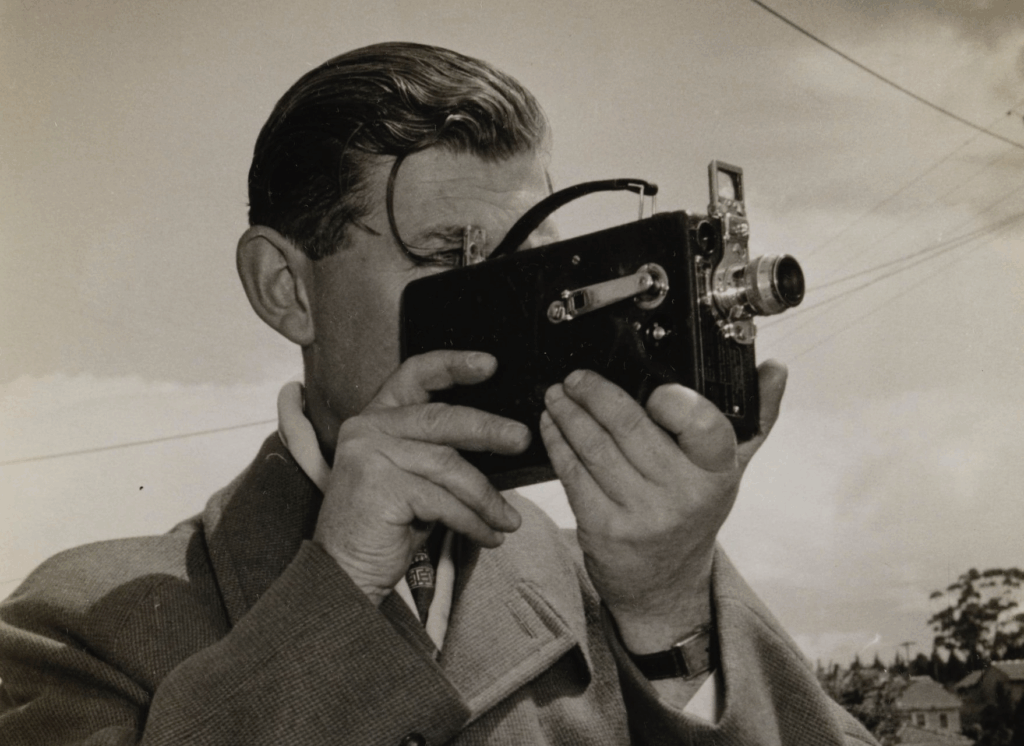
    After the past semester in Documentary Research, it is hard for me to depict just one idea from reading that stuck with me; however, after deep diving into the notes I took, I found something that stood out to me, especially in relation to my life development outside of college. In chapter one of Introduction to Documentary by Bill Nichols, we as a class learned that “a documentary is more than indexical images, more than the sum of its shots: it is also a particular way of seeing the world, making proposals about it, or offering perspectives on it” (Nichols, pg. 24). This stuck with me because as I work in sports, specifically filming with microphones and cameras around at Muhlenberg College, peoples lives are shown on what I am documented. My audience is mainly those interested in watching the sports games, and I want to make sure that I provide the best film that they can get.

    Sports marketing, like documentary filmmaking, is not just about presenting images or events as they are. Instead, my goal is to enhance the audience’s perception by zooming in on certain athletes’ faces, slow motion video, showing the clips twice to show the importance of them. Both of these construct a specific way of seeing the world as I purposely try to shape how audiences perceive teams, athletes, values, and narratives. Just as a documentary “offers perspectives” beyond its raw footage, sports marketing is about making stories about community, identity, winning culture, player journeys, tradition to influence how fans understand and emotionally connect to a team or brand.

    I want to learn how to offer more perspectives on stuff that I am going to be videoing. I want fans to become even more supporters of these teams because of the intricate and personal way I film. After being in Documentary Research, I learned what grabs people’s attention and I learned how to create a documentary that will create feelings and change perspectives. https://uae-up.com/capturing-the-moment-role-of-cameras-in-sports-broadcasting/

  • The Seen Versus Unseen

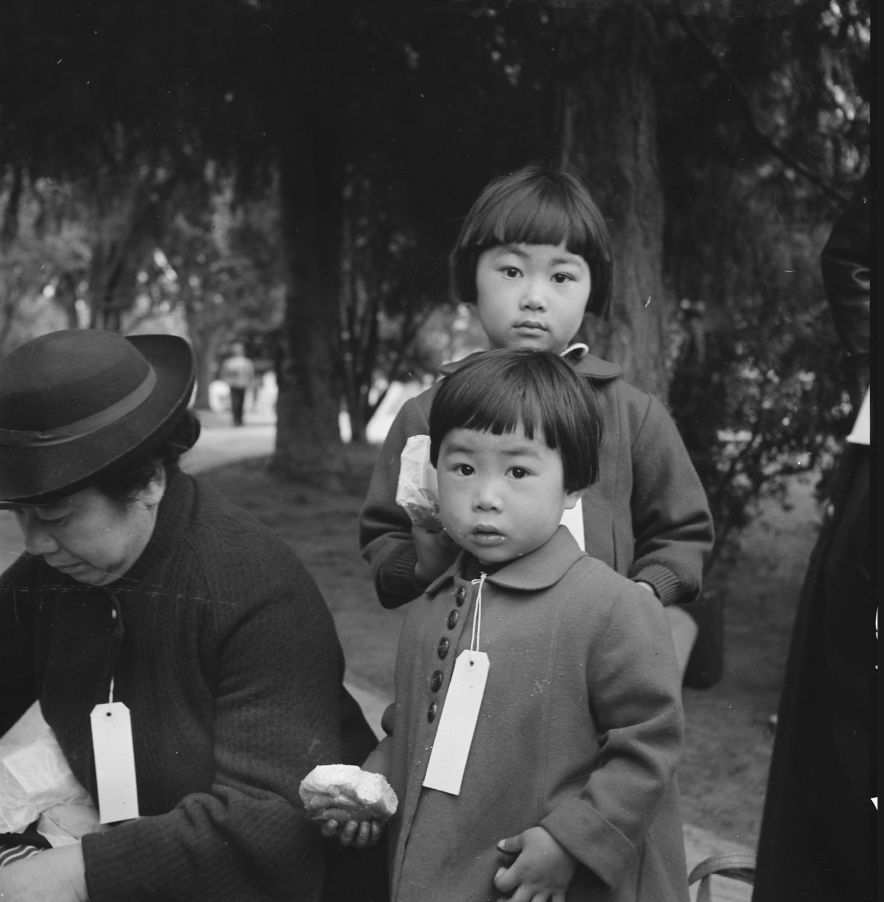
    Dorothea Lange’s 1942 photograph of the Mochida children waiting for the evacuation bus during the World War II internment of Japanese Americans in the United States is a very intimate and intense photo as it shows a private moment of people who were feeling exposed by the harsh power of the government (World War II).  It captures two young children with one holding a sandwich, and both wearing an identification tag around their necks, sitting quietly with their family, looking confused for what is going to happen next. This image is a perfect example of Lange’s powerful, often uncomfortable, drive to document the truth.

    After watching the documentary “Grab a Hunk of Lightning,” I gathered that Lange first saw herself as just a photographer, however, throughout time she started writing up descriptions and stories of the photos which led to her becoming a journalist that incorporated photos and stories to create impactful pieces. This specific photo was taken by a fuel of empathy, but also with an understanding that the camera was a disruption. As Robert Cole has noted, photographers who “probe and scrutinize the undertow of the world” sometimes “pull down those who do it” (pg. 86), acknowledging the difficult ethical space occupied by the documentarian. Instead of Lange leaving the family and their emotions alone,  she intruded upon moments of personal crisis. Her goal is to never just provide a photograph but she also provides stories, forcing viewers to witness what might be “what some may not want to show.”

    Lange makes visible the emotional cost of photographing and disrupting the innocent family. The required tag symbolizes the dehumanization not only this family had to go through, but many other families had to deal with during World War II. The children are physically present, but their futures and stability are absent and that is what Lange likes to capture, she shows the “parts that aren’t there.” By centering the frame on the two children, Lange captures sorrow this situation has caused. The focus on the unseen is what the core is of Lange’s work, making this photograph another representation of her. Lange, just like families in poverty, was also on the road and she had her own struggles with being a mother. As a result of her location she was drawn to taking photos and sharing experiences of their mothers who struggled with similar things, like this photo with a mother and her kids, uncertain with what was going to happen next.

    Lange, Dorothea. Hayward, California. Two children of the Mochida family who, with their parents, are awaiting evacuation. 1942. National Archives and Records Administration, https://catalog.archives.gov/id/537507.

  • Blog Post 3

    One moment in Stranger With a Camera that really stuck with me through the rest of the viewing was when the documentarian Elizabeth Barrett said, “Can filmmakers show poverty without shaming the people they portray?” The ethical tension revealed in this moment was between the public good, in this case O’Connor’s mission to end poverty by tackling its root cause, and the privacy of individual subjects, including the family being filmed and the broader community. The tension lies in the relaxation that while this documentary was made with the intention of securing the poor, it can put those that are being recorded on a negative pedestal, reinforcing negative stereotypes and psychological harm, which can shame the people that the documentary was meant for, which in this case was the Appalachian community.

    The film represents the tension by centering the focus on O’Connor, the one who was murdered, and Ison, the murderer. O’Connor’s intention was to document the poverty in the region, and his belief was that showing the truth would bring attention to the nation. Ison, however, when seeing O’Connor’s camera, believed that it was a tool of exploitation and shaming the region to the outside world. The community deserves a right to dignity and privacy, and the media exposed them. Ison’s reaction was extreme as he murdered O’Connor because he felt that this documentary was shaming the people of Appalachia. While O’Connor started packing up his equipment after shooting, Ison came and yelled at O’Connor, “Get off my property,” and he took 5 shots towards the camera and also shot O’Connor. This represents a complex relationship between social action and social embarrassment.

    One section from Cole’s that illustrates a similar tension is on page 86 when he says, “documentary work is bound somewhat to pull down those who do it, those who probe and scrutinize the undertow of the world.” When reading this quote again after watching the documentary, I saw many similarities in the way that Coles’s idea of the documentarian being “pulled down” by the work relates to Barrett’s film, as it captures the costs that the community feels personally due to trauma, making her feel the need to confront that she may have contributed to a man’s death.

    In order to address that tension, a documentarian should do deep self-reflection. I believe filmmakers should constantly question the goal of the documentary itself. I believe that documentarians should try not to use the subjects’ pain to advance their own career or to satisfy the audience. Everyone’s feelings should be considered, which can be hard to do, but should be done in the most mature way possible. I think that Barrett grapples with  this verbally in the documentary by saying, “A camera is like a gun, it’s threatening.” She realizes that a documentary is invasive, exploitative, and it is never the whole story. Barrett engages in self-scrutiny by structuring the documentary to examine the idea from all sides. By interviewing the community members thirty years later, she talks about the legacy and the consequences of the documentary image.

    ​

  • Blog Post 2

    One person that Cole discusses in chapter 1 and who helps illustrate for not just me, but also Coles, the idea of “location,” is William Carlos Williams. Williams is a poet and a doctor who was known to have associations with his location, especially in Rutherford, New Jersey which was his hometown and his primary source of inspiration. Location can be a tricky concept, however, when putting yourself physically in the place where you are writing about, walking down the tricky paths and taking in the rusty stairs, you understand where you are and why it is the way it is. Cole connected with Williams description to “the thing itself” which is the subject of describing an action, person, place, or gesture (Cole, 46).

    Cole emphasizes that William “ knew in his bones that location made a huge difference, not only the location of a particular documentary project…but the very location of the person doing the project, and of course the reason behind that location” (Coles, 47). This quote stood out to me because it reminds me that where we are shaped by the environment we choose to surround ourselves in and we can structure what we see and also how we see it. Our observations, experiences, and choices are influenced by not only the physical environment we see surrounding us but also the social aspect of the environment – the respect given by the people, the life they live. 

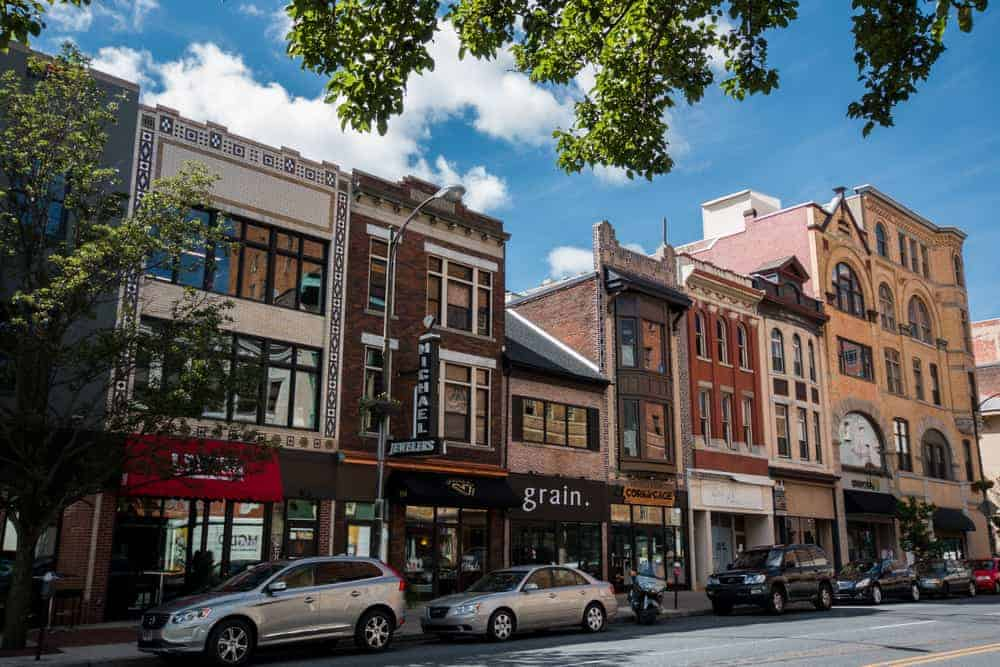
    From what I have gathered, to understand location, you need to be in the location. This makes me think about moments in my own life when new locations have given me a different perspective. For example, when I first left Gaithersburg, Maryland for college in Allentown, Pennsylvania, I was put in a new environment, living with people who were from completely different hometowns, and had varying routines and morals. I became more aware of how my hometown had shaped me. The weekly Friday night football games, the yearly “Kentlands Under the Lights,” the nightly family dinners sometimes even taken on facetime. Being in a different location now has forced me to see myself through a lense. I started noticing details I used to overlook and think were normal across the world but was just normal to me and one big physical thing was the modern architect at home is not what life like is here at a college campus and emotionally, the people here interact differently publicly than at home in Gaithersburg, Maryland. Much like Williams in the snippet we read of him, I realized that the details of a place carry meaning but the meaning is more prominent when you put yourself in that said location. His quotes remind me to pay attention to the small details of my surroundings because small details sometimes provide deeper meanings. A handshake in Maryland may be equivalent to a hug in Allentown but one may not know until you put yourself there.

    Gaithersburg, Maryland

    Allentown, Pennsylvania

  • Blog post 1

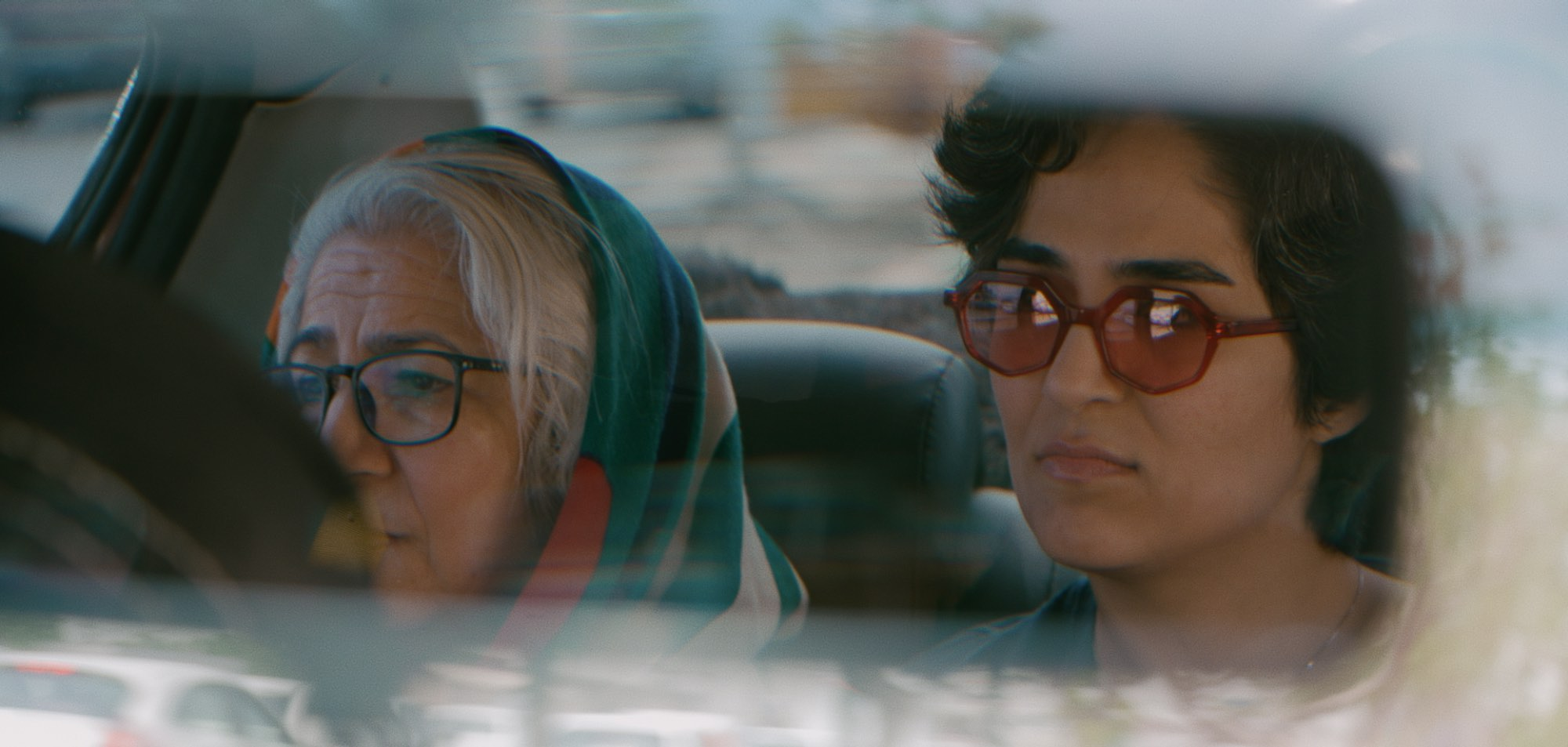
    The documentary “A Move” by Elahe Esmaili brings us into an Iranian family’s life. When venturing into the field, like Cole describes in the introduction, we, the viewers, stepped into the families life to observe, listen, and watch them tell their story. “We focus on words…which kind of language, written by what person…” (Pg4).The documentary film, while only 19 minutes long, explores the deeper meaning of the movement “Woman, Life, Freedom” due to the fact we put ourselves in the setting of a woman with her own family.

    As Cole depicts, documentaries are about entering someone’s world, so honesty is necessary. Inspired by the movement, Esmaili comes “home” to a family event, without wearing her Hijab, and as viewed in the documentary, the older women of the house focus a lot on the woman wearing hats, leading to the audience realizing that dress is a central part of life and the culture in Iran. Home is where her family is, however, not where she is always herself. Esmaili’s family was worried Esamili would not be let into the religious area due to not wearing a hat or hijab because traditionally, not wearing a cover is disrespectful to beliefs. What I believe is the sister, she said “If he makes a comment about you, we all will be in shame” talking about the owner of the house. When walking into the family event, the father added, “adjust yourself to respect him too.” Esmaili did not “adjust herself,” instead she walked in with her head held high, being herself and continuing the movement, not just for herself, but for other women part of traditional households who want to venture out.

    The film relates to Cole’s goal of venturing into streets that are not ours by viewing Esmaili in a personal setting, changing our perspectives of what happens behind closed doors. We, as the audience, cannot watch something at once and produce a paper. Second viewings matter due to picking up something different and picking up on emotions and symbols. When watching the film the second time, I see her family’s judgement of Esmaili wanting to be herself. Not wearing a cover is what she feels comfortable with, rather than following the “norm.”

    By becoming the main focused character of her own documentary, Esmaili provides a first-person view of the emotional and social challenges of the generational struggles happening in certain cultures. Her film of her own personal storytelling showcases universal issues happening just around the corner. Her hope of being open and honest to herself and her family is to help others be that way for themselves as well.

    Image taken from https://directorsnotes.com/2024/06/12/elahe-esmaili-a-move/